A More Enjoyable Driving Experience.

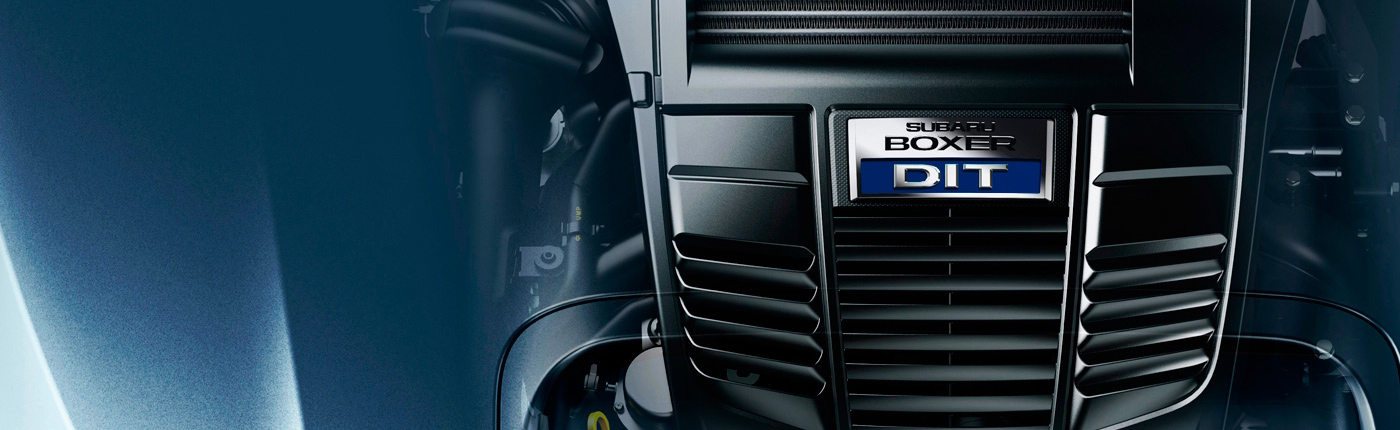
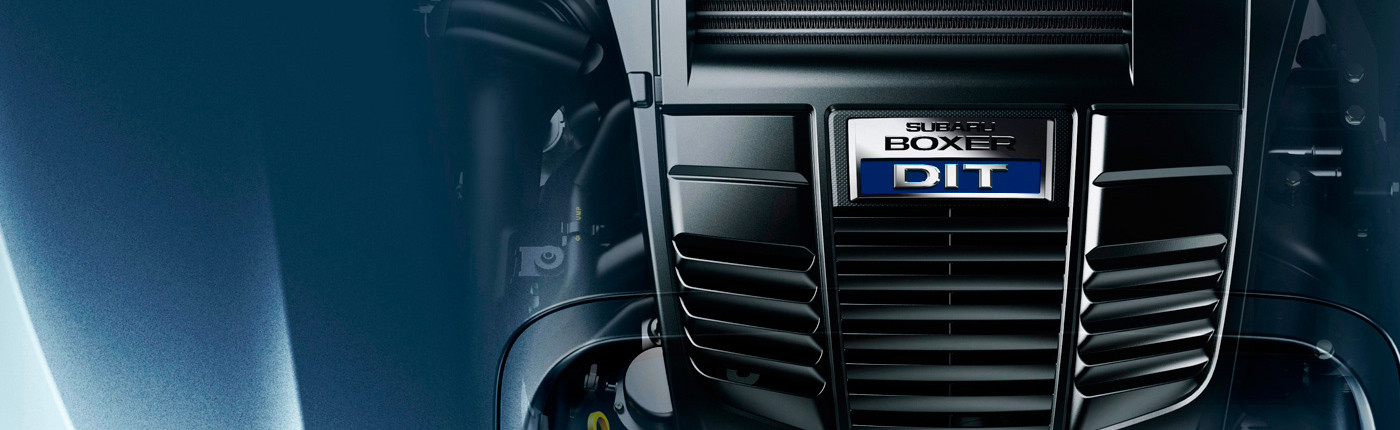
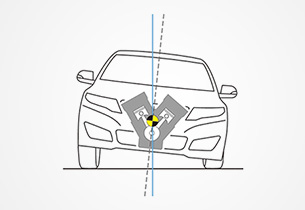
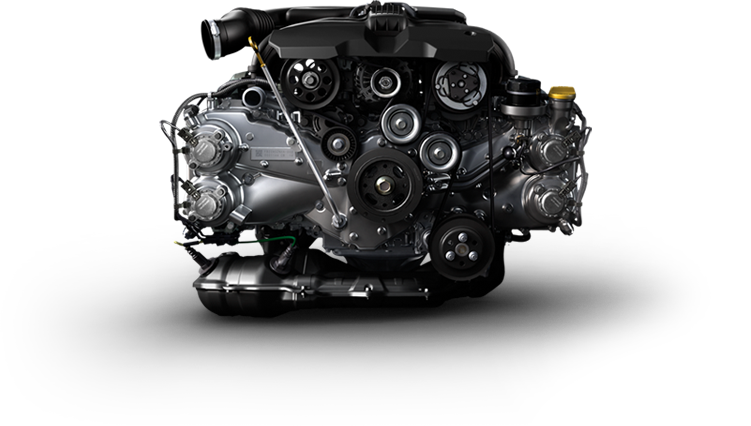
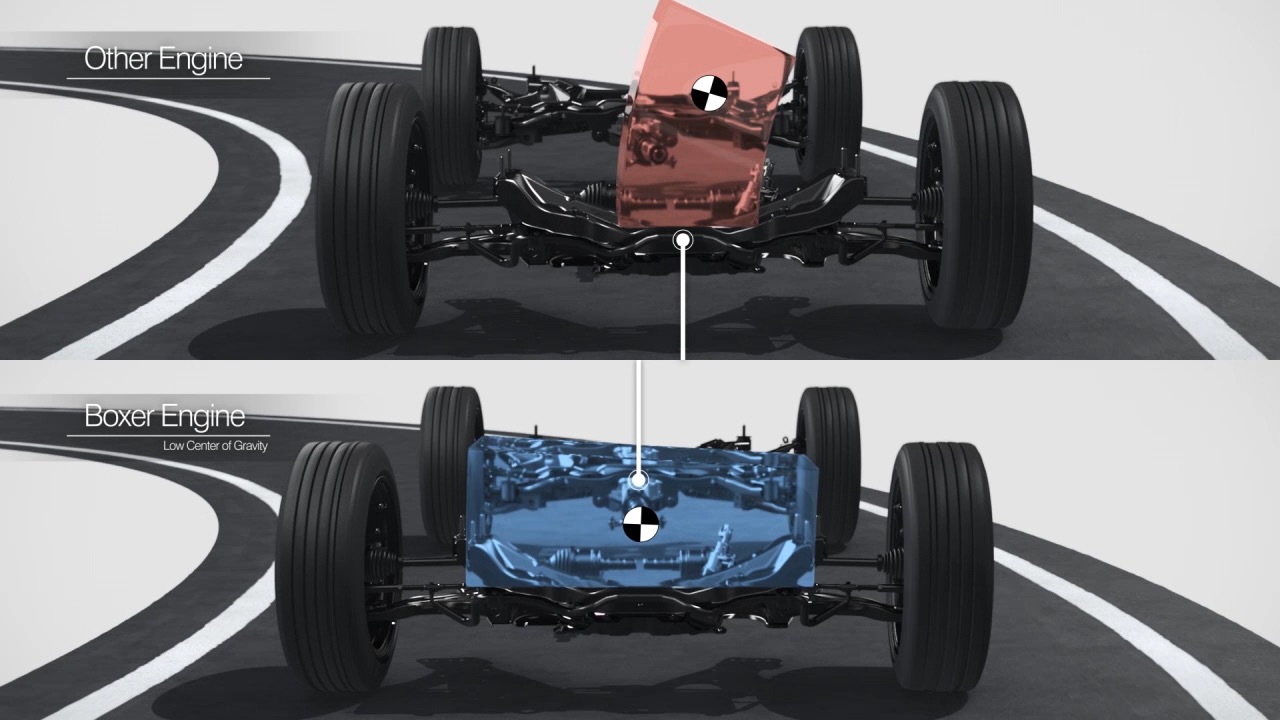
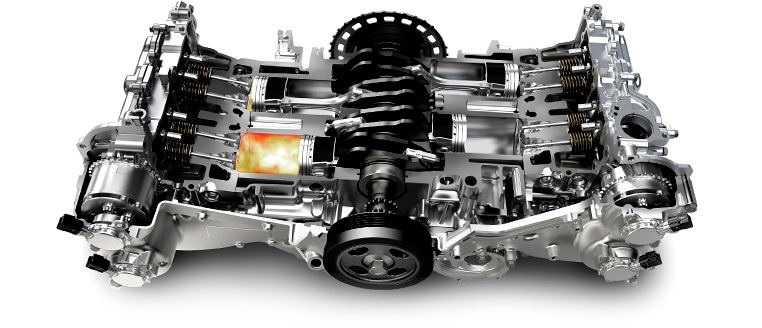
Subaru is confident that the Horizontally-Opposed Engine offers the ideal design for a truly enjoyable driving experience. With its pistons facing away from each other in a 180º symmetrical arrangement around the crankshaft, this engine effectively cancels out vibrations, providing a smooth and stable ride. The engine’s ability to rotate freely at various speeds offers a responsive, exhilarating feel to the driver. Unlike traditional inline engines, the Subaru Boxer engine is more compact and lighter, allowing for a lower vehicle profile. This unique design enables the engine to be mounted lower in the car, ensuring an almost perfectly balanced weight distribution on both sides. The low center of gravity enhances the stability of the entire vehicle, while the symmetrical engine layout further improves the car’s overall balance. Together, these features contribute to a safer, more stable, and ultimately more enjoyable driving experience.

Balanced & Composed.
image
image

Enhanced Stability for Smoother Driving

With its horizontally-opposed engine design, the Subaru Boxer engine features horizontally mounted pistons, making it more compact, lighter, and lower in height compared to traditional inline or V engines. This design improves cornering stability and enhances high-speed driving control, supporting Subaru's commitment to better driving safety and a more balanced ride.
image

Enjoyable, Smooth Acceleration

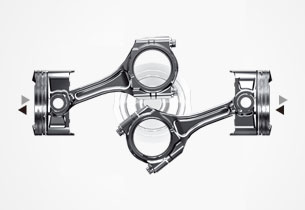
In conventional inline or V engines, the pistons typically move vertically. In contrast, the Horizontally-Opposed Engine features pistons that move horizontally, with opposing forces counteracting each other. This design minimizes vibration, resulting in a smoother, more comfortable acceleration experience.
image

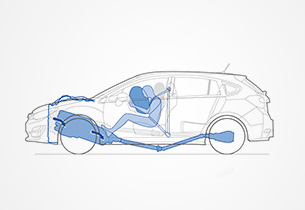
Cabin-protecting layout.

In the event of a head-on collision, the Subaru Boxer Engine and gearbox are specifically engineered to slide beneath the cabin, offering enhanced protection for passengers.Related: Passive Safety.
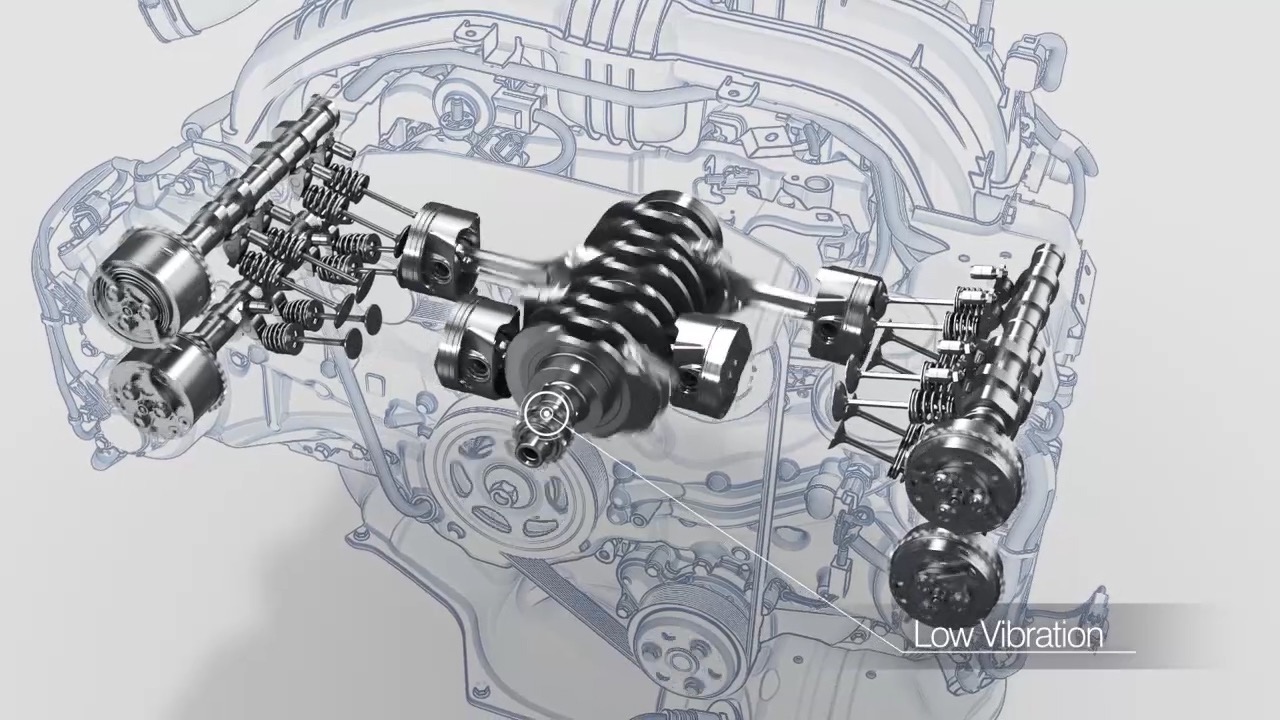
A Boxer engine, or horizontally opposed engine, is a type of engine where the pistons move in opposite horizontal directions, facing each other.
Subaru has been dedicated to the SUBARU BOXER engine for over 50 years, appreciating its numerous advantages over other engine types. This commitment ensures exceptional durability and reliable performance across its vehicles.
Smooth Acceleration
Image
Drivability
Image

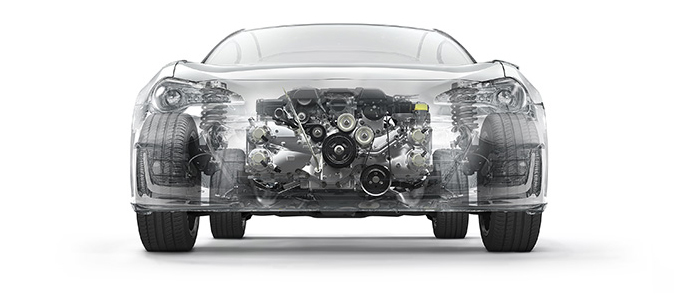
Ultra-low center of gravity packaging
image
image

Comfortable ride

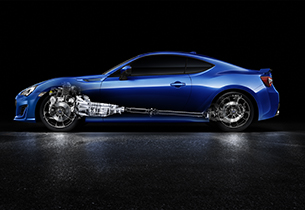
While most sports cars enhance roll stiffness through suspension adjustments, Subaru achieves an ultra-low center of gravity by maximizing the potential of the Boxer engine and vehicle design. This approach minimizes the need for stiffened suspension, resulting in exceptional handling with minimal roll, instability, bumps, and vibrations, ensuring a smooth and comfortable ride.
image

Advantages of shifting to a low center of gravity

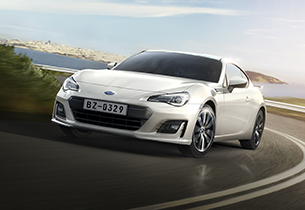
By reducing load shift, Subaru's low center of gravity minimizes posture changes, allowing for smoother motion and enhanced steering response. This ultra-low center of gravity design achieves a gravitational center height of 460 mm1, placing it among the best in the world2. The result is superior handling with excellent response and a comfortable ride for all passengers.
*1 In-house measurements
*2 As of February 2012 (in-house research)
image

Handling with excellent response

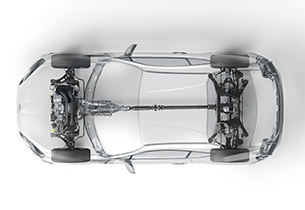
The low center of gravity provides better road contact, minimal roll, and quick convergence, giving the sensation that the vehicle is firmly connected to the road. With an ideal front-to-rear weight distribution of 53:47*, the vehicle delivers a direct, responsive steering experience. This exceptional handling is not limited to race tracks but can be enjoyed by anyone driving on public roads, even on slight curves. This is the appeal of Subaru's ultra-low center of gravity design. *Weight distribution data.
image

Various innovations:

・The design of auxiliary components has been entirely reimagined to achieve the lowest possible center of gravity for the engine.
・The driving position is set as low as possible to lower the overall vehicle's center of gravity.
A lightweight yet highly rigid chassis has been specifically crafted to enhance stability.
・An FR layout is used, with a focus on achieving pure, unembellished handling at its utmost limit.
・A lightweight, strong body structure has been developed to ensure optimal performance across the front, rear, and cabin.

The ultra-low center of gravity packaging is the culmination of Subaru's relentless pursuit to maximize the advantages of the Boxer engine’s low center of gravity. Starting with the inherently low position of the Subaru Boxer engine, it has been further lowered and mounted closer to the center of the vehicle, effectively reducing the car’s overall center of gravity. This groundbreaking innovation has achieved a gravitational center height comparable to that of super sports cars, along with exceptional front and rear weight distribution. The result is a completely new driving experience, one that Subaru’s expertise in horizontally opposed engines, cutting-edge technology, and passion for driving have all contributed to, bringing a revolutionary dimension to vehicle handling.

The Subaru Boxer engine family
image
  • EJ
  • FB
  • FA
  • EE
EJ20
Since its introduction in the first-generation Legacy in 1989, the EJ20 has proven itself as a cornerstone of Subaru engineering, standing as one of the brand’s most iconic creations.

The development of the EJ model began with the goal of creating a successor to the EA engine, which powered Subaru’s first compact passenger car, the SUBARU 1000 (1966), marking the beginning of the company’s Boxer engine legacy. The project focused on enhancing the naturally high potential of the horizontally opposed engine, prioritizing rigidity, efficiency, and performance across every detail.

The EJ20 delivered an exceptional driving experience worthy of the first-generation Legacy, a car designed with the driver in mind. Over time, this engine became the foundation for various engine variations, evolving into a symbol of Subaru’s commitment to engineering excellence. The EJ20 epitomizes Subaru’s ethos—starting with solid design principles and continually striving for improvement.
FB16 / FB20 / FB25
For the first time in 21 years, Subaru has completely revamped its Boxer engine design to meet the evolving demands of a new era. The latest generation of Boxer engines—FB16, FB20, and FB25—introduces a series of enhancements that dramatically improve performance. With upgrades such as a longer stroke, more compact combustion chambers, improved intake and exhaust efficiency with dual AVCS, lighter pistons, and reduced engine wear, these engines achieve high combustion efficiency and remarkable fuel economy.

The improvements have also resulted in more responsive acceleration, especially in the low- to mid-range torque, enhancing the driving experience. These updates deliver not only environmental performance but also greater usability for everyday driving, offering a blend of eco-friendliness and driving pleasure that solidifies the Boxer as a next-generation engine.
FB16 DIT
The FB16 DIT is a highly efficient turbocharged engine designed to strike a perfect balance between power, fuel efficiency, and displacement. Featuring direct fuel injection and an Auto Stop-Start System, this engine delivers strong power without the common drawbacks of small-displacement engines or the typical feeling of a turbocharged unit. It uses regular gasoline, making it cost-effective while maintaining excellent touring performance and fuel efficiency. The next-generation turbo engine from Subaru offers impressive efficiency without sacrificing the driving experience.
FA20
The FA20 is an evolution of Subaru’s next-generation Boxer engine, designed with the goal of achieving higher output, improved environmental performance, and an even lower center of gravity. Building on the core principles of the Boxer engine, the FA20 incorporates a square bore and stroke configuration, along with the advanced “D-4S”* direct injection technology. This engine achieves impressive output performance of 100 PS per liter, while also maintaining low fuel consumption and cleaner emissions.

The FA20’s design focuses not only on performance but also on the driving experience, ensuring that the engine note transmitted to the cabin enhances the joy of driving. This engine lets drivers experience the full potential of the Boxer engine’s unique characteristics, providing a balanced combination of power and efficiency.
*D-4S: Direct injection 4-stroke gasoline engine superior version.
FA20 DIT
The FA20 DIT takes the next-generation Boxer engine further by introducing Direct Injection Turbo (DIT) technology for the first time in Subaru’s history. This turbocharged variant enhances the knock resistance threshold, thanks to precise fuel injection control and the adoption of direct injection, resulting in a high compression ratio and remarkable efficiency—features that were previously unattainable with older turbocharged engines.

Despite its 2.0-liter displacement, the FA20 DIT delivers exceptional sports performance, outpacing many larger-capacity turbo engines while maintaining incredibly low fuel consumption and minimal exhaust emissions. It exemplifies Subaru’s commitment to performance and efficiency, offering the capabilities of a next-generation sports engine with eco-friendly benefits.
EE20
The SUBARU BOXER DIESEL is the world's first commercially available horizontally-opposed diesel engine developed specifically for passenger vehicles. Unlike traditional petrol engines converted to diesel, which typically require the engine block to be strengthened and often result in a bulkier, heavier engine, the Subaru BOXER diesel maintains the original design principles of rigidity. This allowed Subaru to retain the 92.0 mm x 75.0 mm bore and stroke of the 2.0-liter petrol four-cylinder engine, modifying it to a square 86.0 mm x 86.0 mm design for the diesel version.

This reconfiguration results in a more compact combustion chamber and enhanced fuel efficiency. Additionally, the engine is equipped with a high-pressure common rail fuel injection system, an improved oxidizing catalyst with a closed Diesel Particulate Filter (DPF), a variable nozzle turbocharger, and electric power steering, all of which contribute to reduced fuel consumption and CO2 emissions.

To further enhance performance, ceramic glow plugs are used to improve cold-weather starts. The EE20 engine not only meets the ultra-clean EURO5 emission standards but also provides significantly more torque than previous models. With a peak torque of 350 Nm available at a lower 1,600 rpm, the engine delivers smooth, responsive performance at all speeds. These advancements reflect Subaru’s commitment to innovation and environmental responsibility, showcasing the inherent advantages of the Horizontally-Opposed Engine.

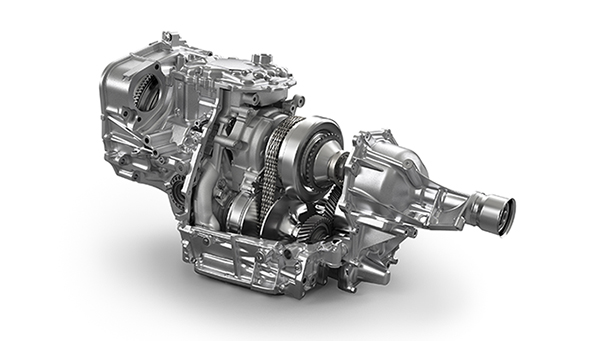
Subaru’s transmission family.

image
  • Lineartronic
  • E-6AT
  • 6MT
Lineartronic
The Lineartronic CVT, Subaru’s distinctive next-generation continuously variable transmission, utilizes a vertical chain design and is featured in many of its models. This advanced transmission enhances fuel efficiency by continuously adjusting to the most appropriate gear ratio while keeping the engine operating in its most efficient ranges, including the lower RPM bands. Additional benefits of the Lineartronic system include smooth, responsive acceleration, a more comfortable ride free from shift shocks, and reduced noise for a quieter driving experience.
E-6AT
The E-6AT is engineered with a focus on achieving a light and compact design. By incorporating direct control, it provides a quick, responsive gear shift and a smooth driving experience. One of the standout features is the downshift blipping control, which is included in the SUBARU BRZ. This feature synchronizes the engine speed when shifting to lower gears, enhancing smoothness and elevating the driving experience, particularly in sports car dynamics.
6MT
The 6MT, exclusive to Subaru's symmetrical AWD system, offers an exceptional blend of smoothness and rigidity. Its gear ratios are precisely calibrated to optimize both fuel efficiency and driving performance. Subaru enhances the driving experience by customizing the manual transmission for each vehicle model, ensuring a more engaging and controlled driving experience.